
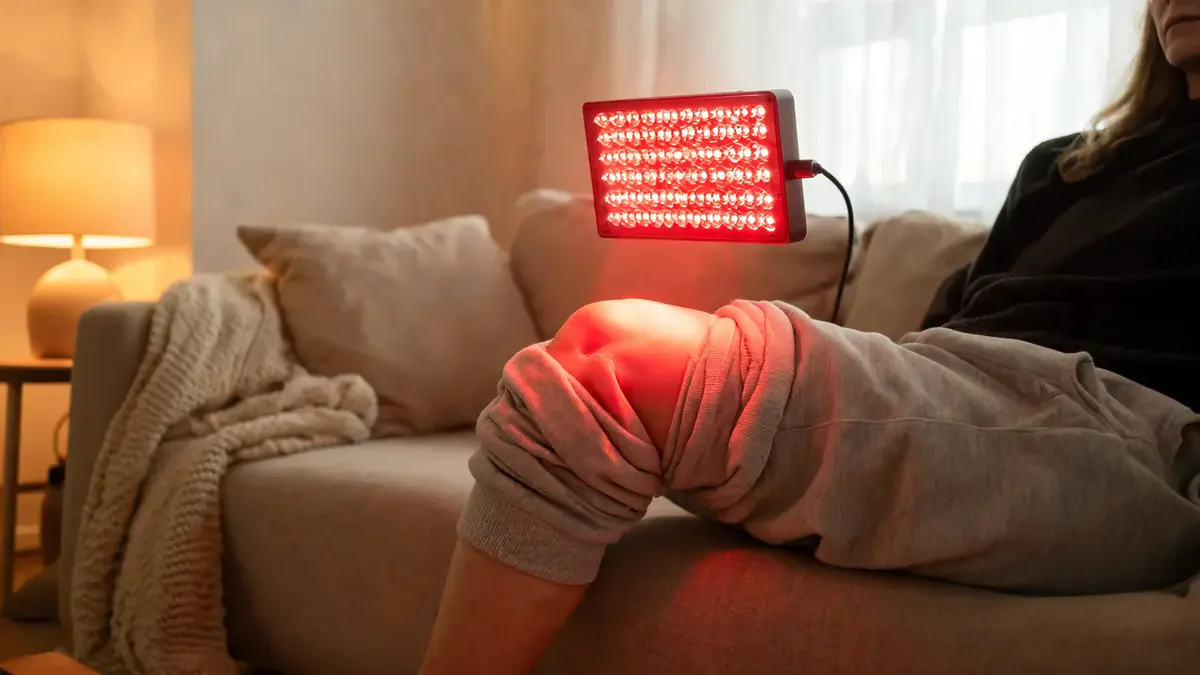
I had been managing grade 3 knee osteoarthritis for four years. By January 2026, my orthopedic surgeon and I had exhausted most of the conservative options: physical therapy, corticosteroid injections (three rounds), hyaluronic acid injections, bracing, activity modification. My most recent MRI showed further joint space narrowing and he said, honestly, that I was looking at knee replacement surgery within 6-12 months if things continued at this trajectory.
I was 58. I knew knee replacement surgery works. I also knew recovery is brutal and the implants have a functional lifespan of 15-20 years, which meant at my age I would probably need a revision surgery in my 70s. I asked for 90 days. He agreed it would not make things worse to wait.
What I Added
I had been doing supplements for two years: Performance Lab Flex, omega-3 at 3g/day, and weekly Epsom salt soaks. What I had not tried was a device-based intervention. My PT had mentioned red light therapy as something he was seeing more patients try with mixed but sometimes notable results. I bought a NovaaLab targeted knee pad and committed to 15 minutes per knee, every day, for 90 days.
I also added Therasage infrared heat 20 minutes in the morning before exercise, on the advice of the same PT.
Weeks 1-3: Cautious Optimism
The most noticeable early effect was post-exercise recovery. After my daily 30-minute walk, the usual 2-3 hour period of increased aching and stiffness shortened to about 45-60 minutes by week 3. I was not sure if this was the red light therapy, the infrared, placebo, or just seasonal variation in my symptoms (I started in February, when my OA is typically at its worst).
I had learned not to get excited about short windows of feeling better. I had been here before. I kept tracking the data anyway.
Weeks 4-8: The Changes I Noticed
Morning stiffness dropped from an average of 65 minutes to about 35 minutes by week 7. My daily pain rating (1-10, logged each morning) went from an average of 5.8 down to 4.1. These are subjective numbers, but I had been tracking them for 18 months and the change was outside the normal variation I had observed before.
I started sleeping through the night more consistently. Pain-related sleep disruption is one of the most demoralizing parts of severe OA and it had been getting worse for 18 months. By week 8, I was waking up once rather than three or four times.
The 90-Day Appointment
My orthopedic surgeon ordered a new MRI at the 90-day mark. Structurally, the joint space narrowing had not reversed, which was expected: nothing reverses cartilage loss in grade 3 OA. What he noted, and what surprised both of us, was that the synovial inflammation markers on the MRI had measurably reduced. The synovium around the joint was less thickened than the previous scan.
He said he had not expected that. He asked what I had changed. When I told him, he said he could not attribute the change to the red light therapy specifically, but he also could not rule it out. He pushed my surgical evaluation timeline back 6 months and asked me to continue what I was doing.
Where Things Stand
I have not had the surgery. As of April 2026, 14 months into the daily red light + infrared routine, my daily pain average is 3.4 and I am still walking 45 minutes per day without the post-walk aching that defined my life for years. My surgeon has not ruled out surgery long-term. My goal is not to avoid surgery forever. It is to be functional, manage the pain, and make that decision on my own timeline rather than from a place of desperation.
I am not suggesting red light therapy cures or reverses osteoarthritis. The structural damage in my knee is real and permanent. What changed was the inflammatory environment around the joint and the pain I experience as a result of it. That is not nothing.
The devices I used
NovaaLab targeted knee pad (15 min per knee, daily) and Therasage infrared pad (20 min, morning). Both have money-back guarantees if you want to try a structured 60-90 day trial.
Check NovaaLab