
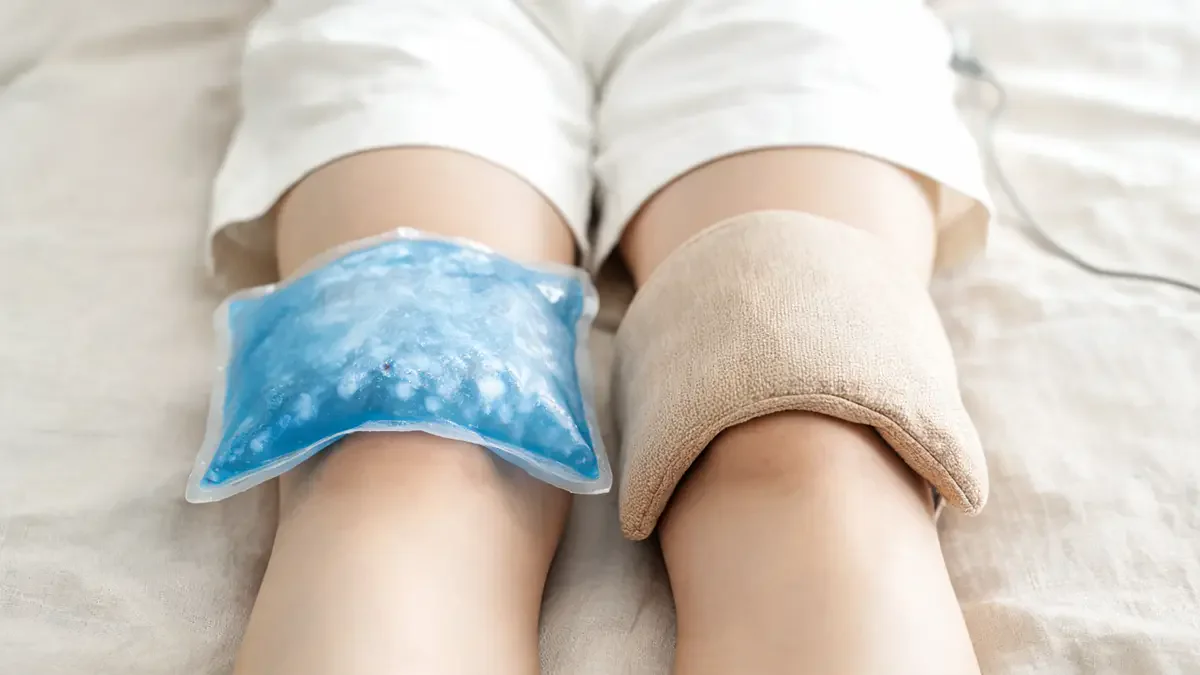
Ice for Joint Pain
Reduces acute inflammation, numbs pain, limits swelling. Best immediately after activity, during flares, and for sharp acute pain.
Check Carex Cold TherapyHeat for Joint Pain
Increases circulation, relaxes muscle, reduces stiffness. Best for chronic stiffness, before activity, and for the dull aching pain of established OA.
Check Therasage Infrared PadWhy the Difference Matters
Ice and heat work through opposite mechanisms. Ice constricts blood vessels (vasoconstriction), reducing blood flow to the area and slowing the inflammatory cascade. Heat dilates blood vessels (vasodilation), increasing blood flow and relaxing surrounding muscle. Applying heat to an acutely inflamed joint (where there is already excess fluid and inflammatory activity) can worsen swelling and pain. Applying ice to a stiff joint before activity can increase stiffness further.
When to Use Ice
- Immediately after activity that caused joint pain or swelling. Apply for 15-20 minutes within 2 hours of the activity.
- During an acute flare in RA or OA where the joint is visibly swollen and warm. Ice reduces the acute inflammatory response.
- For sharp, acute pain as opposed to the dull background aching of chronic OA.
- Gout flares: ice is appropriate and effective; heat is contraindicated during active gout.
Method: wrap ice pack in a thin cloth (never apply ice directly to skin). 15-20 minute sessions. 45-minute break between applications. No more than 3 times per day on the same area.
When to Use Heat
- Morning stiffness: heat before getting out of bed or before the first walk of the day significantly reduces warm-up time.
- Before physical therapy or exercise: heat warms the joint and relaxes surrounding muscle, improving range of motion and reducing injury risk.
- Chronic dull aching in OA where there is no acute inflammation present (no visible swelling, no warmth to the touch at the joint).
- Muscle spasm around an arthritic joint: heat is directly effective for muscle, not just joint tissue.
Method: standard heating pad for surface-level warmth, infrared heating pad (Therasage) for deeper joint tissue penetration. 20-30 minute sessions. Do not sleep with a heating pad.
The Quick Rule
If the joint is swollen, warm to the touch, or just had acute stress: use ice. If the joint is stiff, aching, and not acutely inflamed: use heat. When in doubt, ice is the safer choice because applying heat to an inflamed joint is worse than the reverse.
Can You Alternate Ice and Heat?
Yes, for chronic OA without acute flares. Contrast therapy (alternating cold and heat) can improve circulation and reduce chronic pain. Use ice 15 minutes, heat 15 minutes, 2-3 cycles. This is more effective than either alone for chronic stiffness with background inflammation.
Infrared heat is more effective than standard heat pads
Standard heating pads heat the skin surface. Infrared pads (Therasage) penetrate 3-4cm deeper to reach joint tissue. For arthritis specifically, the depth makes a meaningful difference in therapeutic effect.
Check Therasage Infrared Heating Pad